A Two Egg TV Page. See more at https://twoeggtv.com.
Showing posts with label lake seminole. Show all posts

Tuesday, January 28, 2020

Can you dress like a pirate?? Prove it at Pirate & Heritage Days!

Public invited to "Dress like a Pirate" for Pirate and Heritage Days!

Ready to let your inner pirate out?! Your chance is coming on May 1-2 when Three Rivers State Park hosts Pirate and Heritage Days!

The event will commemorate the life and times of the adventurer and pirate William Augustus Bowles, who once frequented the Apalachicola and Chattahoochee Rivers. His ships raided commerce on the Gulf of Mexico in 1799-1804, sailing under the flag of the "State of Muskogee."

Jackson County is rich in stories of this unique individual. Legend even holds that he left behind a vast treasure that still remains to be found somewhere along the Chattahoochee River arm of Lake Seminole. 

You might not find the lost treasure, but you can definitely get in on the fun and collect a reward of your own by participating in the "Dress Like a Pirate" contest!

Members of the public are encouraged to bring their boats out for the William Bowles Pirate Regatta up Lake Seminole from Sneads Park on Friday, May 1. Launching begins at 4 p.m., and the Regatta will set sail at 6 p.m., led by the authentic 19th-century keelboat Aux Arc (pronounced "Ozark"). Fly your pirate flags and wear your pirate best to compete for cash and prizes as the Aux Arc leads the way with her cannon thundering! Registration information is coming later this week!

After the Pirate Regatta, the fun continues at Three Rivers State Park on River Road just north of Sneads, Florida. The evening will feature live music, entertainment, food, exhibits, and living history portrayals of life in Florida during Spanish colonial times. The "Dress Like a Pirate" contest will continue as team members from Two Egg TV will identify great costumes in the crowd and award cash on the spot!

More fun is set for Saturday, May 2, from 9 a.m. to 2 p.m. Central/10 a.m. to 3 p.m. Eastern, as Pirate and Heritage Days at Three Rivers State Park continues. Fun planned for Saturday includes living history demonstrations, entertainment, historical lectures, exhibits, vendors, food, and more. Plus, "Dress Like a Pirate" competition will continue with Two Egg TV passing out more instant cash and prizes to best dressed members of the public!

Pirate and Heritage Days at Three Rivers State Park is supported by Florida State Parks, the Jackson County Tourist Development Council, Jackson County Public Works, Two Egg TV, the Town of Sneads, and more! Additional sponsors will be announced soon.


Thursday, January 9, 2020

Pirate & Heritage Days coming to Three Rivers State Park!

May event will commemorate the legacy of William Augustus Bowles!

by Dale Cox

The pirate and adventurer William Augustus Bowles
will be remembered at Pirate & Heritage Days at
Three Rivers State Park in Sneads, Florida.
The Chattahoochee River and Lake Seminole in eastern Jackson County are abundant in the history of the adventurer and pirate William Augustus Bowles. He once lived along the river, and his ships made it as far upstream as the forks of the Chattahoochee and Flint Rivers, where Lake Seminole is located today.

To commemorate this unprecedented era of history, Three Rivers State Park is working with the Jackson County Tourist Development Council, the City of Sneads, Jackson County Parks,  and Two Egg TV to host a brand new festival. Pirate & Heritage Days will take place at the lakefront state park on May 1 & 2, 2020.

Bowles arrived in the area during the American Revolution after he was tossed from the British military at Pensacola for a disciplinary infraction. He wandered lost in the woods of Northwest Florida until a trading party of Native Americans found him and carried him to the Perryman towns. These large Lower Creek Indian villages were near today's Parramore Landing.

Bowles enjoyed his new life there so thoroughly that he married Mary Perryman, the daughter of Chief Thomas Perryman, and was adopted by the tribe. He fought at the Battle of Pensacola, one of the most significant actions of the Revolutionary War, in 1781. America's ally Spain won the battle, however, and regained control of the city and Florida.

Bowles's pirate ships flew the "State of
 Muskogee" flag in 1799-1804.
State Archives of Florida/Memory Collection
The adventurer went briefly to his family home in Maryland and then on to the Bahamas, from where he came back to the area to open a new route for smuggled goods from the islands. Spain captured him, however, and sent him away to Cuba, Spain, and eventually the Philipines. Bowles escaped, and by 1799 was back in North Florida!

He was furious over his treatment and declared war on Spain! By this time, he called himself the Director-General of the "State of Muskogee," a mostly imaginary empire that he founded in the Florida borderlands. His followers included white adventurers from American territory and the Bahamas, Maroons (escaped slaves), and a few hundred Lower Creek, Seminole, and Miccosukee warriors.

Three Rivers State Park is on the shores of beautiful
Lake Seminole in Sneads, Florida.
To carry out his war, Bowles commissioned a flotilla of "privateer" ships that sailed from the Apalachicola River out into the Gulf of Mexico to prey on Spanish merchant ships. These pirate vessels raided dozens of ships, and their crews included Native Americans from the Perryman towns. The raids continued for about five years until he was captured again and sent away to prison in Cuba, where he died.

The story of Bowles and his pirate ships is a big part of the culture and history of Jackson County. Two different buried treasure legends originate from his activities!

Pirate & Heritage Days will feature a boat parade on Lake Seminole, food trucks, vendors, living history encampments, live music, storytelling, and much more! Everything will take place lakefront at beautiful Three Rivers State Park, with the boat parade launching at Sneads Park and passing the festival grounds.

More details are coming soon, but mark your calendars for the afternoon/evening of May 1 and morning/midday of May 2! If you have a boat or even a kayak or canoe, make plans now to join the boat parade on Friday, May 1!


Wednesday, October 30, 2019

The Witch of Buena Vista Slough

A Haunting near Buena Vista Landing

by Dale Cox

A bizarre series of events along Buena Vista Slough (then called Sugar Mill Creek) terrified residents in Florida's Chattahoochee River valley more than 140 years ago.

October 1877 was a time of growing optimism in eastern Jackson County. The violence and strife of Reconstruction were finally over, the local economy was improving, and riverboat traffic was once again booming on the Chattahoochee River. Sugar Mill Creek flowed from a collection of small springs past the remains of the already ruined mill that gave the stream its name to join the river near today's Parramore Landing.

The lands along its low ridges were well-suited for the production of cotton, corn, tobacco, and other crops, and the harvest was good that fall. Most of the farms were small, and the families who settled near the creek in the years after the Civil War included whites, blacks, and Native Americans. All worked the land or cut timber to make their livings.

Things seemed peaceful as everyone worked and waited for the first cold snap of winter and "hog killing" time. No one, however, expected what happened next:

Buena Vista Slough now covers the original Sugar Mill Creek.
A Witch! The people about Sugar Mill creek in east Jackson are all alarmed about a witching at Godwin's spring on Thursday night last. Highsmith, an elderly Negro man, says his family was asleep by the fire when an unseen witch started to pelt his cabin with stones and brickbats. Thinking it was irreverent pranksters or Republicans he took up his shotgun and rushed into the yard only to witness a piece of lime rock rise from the ground and dash itself against his chimney. - Marianna Courier, October 1877. 

Godwin's Spring, where the incident supposedly took place, is now underwater at Godwin Lake, the head of the slough that extends north from Buena Vista Landing on the backwaters of Lake Seminole. The spring and the small creek that it and a few other springs headed was inundated when the Jim Woodruff Dam was completed in 1958.

Buena Vista Landing as seen from the slough.
Stories of witches or other unseen forces that threw rocks, bricks, and other objects against the sides of houses were relatively common in the 19th century. The best-documented case was the Edgefield Ghost in South Carolina, but the best-known was, without doubt, the Bell Witch of Tennessee.

People in that day usually blamed such instances on witches, although today they are often said to be the result of "poltergeist" activity.

More from the Witch! A witch seems quite begrudged with the people above Bellview on Sugar Mill creek. Brickbats, rocks, crockery and tools fly about. Dogs howl without ceasing. Bells sound at midnight. The rattle of dragging chains distinctly heard. Birds that speak. A creature like a dog with the head of a cat! If but half the stories are true then the good citizens of that vicinity had best revisit the methods of Cotton Mather of old Salem! - Marianna Courier, October 1877

The two brief articles are the only known written accounts of the paranormal "outbreak" that shook the Buena Vista area of eastern Jackson County in 1877. Earlier generations had vague memories of the incidents and told of how their parents and grandparents met for weekend-long brush arbor "preachings" and "camp meetings."

Like the Edgefield and Bell Witchings of earlier generations, this one also slowly faded away.


Sunday, May 6, 2018

Economic chaos strikes Jackson County. What should we do?

Dale Cox is a retired business leader and journalist
who lives in the "suburbs" of Two Egg, Florida. He has
received national awards for literature and investigative
journalism and has managed multi-million dollar
media outlets and news operations in locations
across the United States.
The following is an open letter to the people and leaders of our community.

Jackson County residents are awakening to a financial crisis that is striking our community from the top to bottom.

The move to close Fire Rescue stations on some days due to insufficient staffing numbers brought the situation home to many, but the county's budget situation is neither sudden nor unexpected. In fact, it has been building for years and numerous local citizens and business people have raised concerns about it only to be promised callbacks that never came or reassurances that the matter was being studied.

In one case a local businessman was even told by an intermediary that he should get behind a specific county commissioner politically if he wanted to be heard.

So what happened? Where did the money go? What can we do about it?

Here are some answers that you have not read in the Jackson County Floridan or Jackson County Times. In their defense, the former often blames lack of staffing for its inability to cover key stories in the community while the latter sometimes says that it only covers "good news."

What is the problem?

The answer, in short, is that we are in the depths of an economic recession that goes far beyond what the rest of the nation suffered in 2008-2009.

Full-time employment in the county is down dramatically since around 2006 due to NAFTA which was a factor in the closings of the local Russell Corporation plants and facilities as well as other industrial operations; the closure of Dozier School for Boys due to the controversy and publicity that surrounded the facility; the loss or downsizing of businesses that supplied these facilities and, last but not least, a dramatic decline in the number of locally owned small businesses.

The net result of the above is that we have lost thousands of full-time jobs with benefits while at the same time local public assistance rolls have skyrocketed.

Financially, many more people in our community are hurting than our leaders seem to realize.

Consider these two statistics:

  • Median income in Jackson County has declined from $36,442 in 2009 to $35,470 in 2016. This is a drop of $972 over seven years. As economic development experts will tell you, that is a shocking decline.
  • The number of businesses in Jackson County has dropped from 863 in 2007 before the national recession began to 768 in 2017. In other words, we have lost 10% of our business community since 2007.
As Jackson County is learning the hard way, unemployment numbers do not always tell the true story of what is happening to a community's economy. Unemployment numbers, for example, do not count people who have been unemployed for so long that they no longer receive unemployment compensation. Nor do they count the people once employed here who have been forced to move away in search of work.

Young people are leaving for better opportunities in other places.

You often hear people say that their son or daughter, niece or nephew had to leave Jackson County to find a good job. This is more true today than ever.

Here are the facts:
  • Jackson County has 1,906 fewer people in the primary working age demographic (18-65) than it did just 8 years ago. 
  • Local officials often blame this on population aging - or as one county leader actually put it - "old people dying off." Census data, however, suggests that this is not the case. The county's population of residents over the age of 65 - many of whom still work to make ends meet - has indeed grown by 1,253 people since 2010. Unfortunately, we have lost 2,715 people in the 18-65 and 17 and under age groups. 
  • Jackson County has lost 617 households since 2009. If you think you are seeing more "for sale" signs along our roads and streets, you are.
  • The drain in our labor force is a very real problem when it comes to attracting new industry to the community. If we can't demonstrate that we have a strong, prepared labor force, we can't attract industry. No factory wants to open somewhere only to find that it can't hire enough people to run its lines.
Sales Tax collections are down.

The loss of 95 businesses, the decline in population and the loss of full-time jobs are all impacting the retail business in Jackson County. Here are the facts:
  • Sales tax collections in the main category are down dramatically over the first 8 months of 2017-2018 when compared to the same line item for the same months in the year before the recession (2006-2007).
  • The drop is bigger than you might think. This year, collections in this category are down by $244,823 from their level in the first 8 months of 2006-2007.
Money that one decade ago was helping to fund local government is simply no longer there in the amount that it was back then.

Gasoline Tax collections are down.

Gasoline taxes fund road work and improvements in Jackson County. These monies too, however, are on the decline. 
  • Using 1-cent local option gas tax collections to measure this decline, the amount brought in during the first 7 months of the 2017-2018 fiscal year is down by $8,394 since 2006/2007.
  • The real number has dropped from $391,034 during the first 7 months of 2006/2007 to $382,640 during the first 7 months of this fiscal year.
  • All other gas tax collections that benefit the county are also down. 
As families cut back on expenses or leave the area, their need to buy gasoline here decreases. When fuel purchases go down, money coming into county coffers also goes down. 

Tourism is way down.

Jackson County had a small but thriving tourism industry in 2006/2007. It has dropped by around 10% since that time.
  • Tourism tax (i.e. "bed tax") collections in Jackson County were $124,158 for the first four months of 2017-2018 (the most recent numbers available). This is a drop of $12,032 in actual dollars from 2006-2007 when collections totaled $136,190.
  • Just as sales tax collections reflect retail sales in a community, tourism tax collections reflect hotel and campground stays. Fewer people are staying here overnight than were doing so one decade ago.
  • Attendance at Blue Springs is down dramatically since the county commission doubled entrance fees. Numbers for the 2017 summer season show a decline of nearly 15,000 visitors since 2014, when fees were increased. Money collected at the gate is down since that year. Concession sales are down since that year. Boat rental fees are down. Pavilion rental fees are down. Total revenue from the park is down by around $18,000 from 3 years ago. If that trend continues this summer, the park will make less money than it did before fees were doubled while serving nearly 20,000 fewer local residents and visitors.
It should be mentioned that efforts designed to help attract more visitors to Jackson County have often been blunted or ignored by county administration. Consider the following:
  • The Florida Department of Economic Opportunity funded and approved the results of a $20,000 study on ways to improve tourism traffic along U.S. 90 in Jackson County. The plan was prepared by this writer and approved not only by the state, but also by the Tourist Development Council and the Board of County Commissioners. Since that time, several years ago, nothing has been done implement any of the recommendations. One county official even informed a group in Sneads last year that he "hadn't had time to read it" and wasn't sure what he had done with his copy. 
  • Local citizens raised and gave to the county more than $5,000 in funding for boardwalks on the Bellamy Bridge trail, an amount matched by the Tourist Development Council. County officials gave assurances that the money was sufficient for the purpose. Despite annual promises to build the footbridges - which will allow access to the popular tourism attraction during most times of high water - they still have not been built. The county now says that it has spent the money donated for the purpose and despite repeated requests has failed to answer specific questions about unauthorized expenditures from the fund.
  • Requests that the Tourist Development Council lead a group to organize an annual reenactment of the Battle of Marianna were rejected. A reenactment of the battle staged for its 150th anniversary in 2014 attracted thousands of people. 
  • One of the landings on the Merritt's Mill Pond canoe trail has been closed by property owners and has not been replaced. 
  • The Upper Chipola River paddling trail, approved by the state after the county promised to maintain it, is barely maintained.
  • The county's decade old effort to create an approved plan for development of tourism resources along Lake Seminole from Neals Landing on Highway 2 to Sneads is still not complete.
  • The fall in tourism tax revenue is also reflected by the decline of gas tax collections. With our population and median income falling, our failure to return to pre-recession/pre-Dozier controversy levels of tourism has is hurting us in areas far beyond hotel stays.
"Other places have the same problems."

This is a common excuse heard in Jackson County, but is it true? Consider these facts:
  • Holmes County to our west and Gadsden County to our east have increased their sales tax revenues during the same time that Jackson County has seen its revenues fall. In fact, those two counties along have increased sales tax collections by $879,000 during the period described above while Jackson County has suffered a decline of $244,000.
  • Washington County and Holmes County, on US 90 and I-10 west of Jackson County, have increased their 1-cent local option gas tax collections while Jackson County has experienced a drop. Washington County's collections are up by $8,540 and Holmes County's by $2,076 while Jackson is down by more than $8,000.
  • Tourism is increasing in Washington and Holmes Counties to our west and Gadsden County to our east, while falling in Jackson County. Washington County has increased its tourism tax collections over the period described above by $4,896. Holmes County is up by a remarkable $14,794. Gadsden County is up by $25,104. This reflects an increase of more than $40,000 in tourism tax collections by adjoining rural counties while Jackson County's dropped by more than $12,000.
What is the answer?

This is the question that many of us have been pondering for years. I have discussed the very same trends outlined above with county administrators, county commissioners, tourism leaders, other business people and at the Chamber of Commerce's Leadership Jackson County class for years. Others have done the same. Our inability to get anyone to pay attention has been so frustrating that I have sometimes wanted to bang my head on my desk.

The recent news about Jackson County Fire Rescue was just such a moment. Those who pay attention to such things have known for years that this problem was coming. The problem of our trained employees leaving for other places so they can better support their families is not new, and yet years have passed with no major effort to provide better pay so they can stay here. 

Nothing written here should be taken as a criticism of any person or group of people. My goal is to put the facts and my thoughts on them out there for my friends and neighbors to consider. I am an eternal optimist and I believe that we can reverse these alarming trends - and should have already reversed them - but time is growing short. I am not running for public office and have no plans to do so. I hope that this will be seen as what it is, an open letter to the people and leaders of Jackson County with thoughts and ideas from someone who just wants to help.

Here are some recommendations that I have after studying the numbers. Your ideas may be better than mine. It is time for us to start thinking and listening and - above all else - taking action.
  • Clerk of Courts Clayton O. Rooks should lead a full audit of county funding to tell us how much is coming in and where it is going. This would help our leaders see places from which money can be moved or cut to assure that our most important county services - Fire Rescue, Law Enforcement, etc. - are not only funded but improved. Reducing these services is not an option. This would also help us identify any financial improprieties.
  • County commissioners should consider an immediate moratorium on non-essential travel outside Jackson County by their employees. This money is needed to keep Fire Rescue running.
  • Work with Chipola College, Baptist College of Florida, Troy University, FSU, FAMU, UF and other institutions to provide real training so county employees can improve themselves. We can always get better and improving the skills of the people who work for us is a good way to help them get better and more efficient at their jobs.
  • Do not, under any circumstance, increase another tax or fee until our economic situation is turned around. Real people are suffering here. Median income is down. Our working age people are fleeing and taking their children with them. Use the money that we have to make things better. It can be done. Private businesses do it all day, everyday. 
  • Don't assume that every thought, criticism or idea is political. Most people here just want to see things get better. 
  • Work together. The county should work together with Sneads, Marianna, Graceville and other municipalities to find areas of agreement that all can support (and vice versa). Communities in specific parts of the county should work together. Malone, Campbellton and Graceville, for example, have Highway 2 in common. Perhaps they could work together to improve that corridor of the county? The same is true for the Historic Highway 90 Corridor that passes through Sneads, Grand Ridge, Marianna and Cottondale and the US 231 corridor that connects Campbellton, Jacob City, Cottondale, Alford and the Compass Lake area.
  • Clean up! Make our interstate exits the cleanest and prettiest in Florida. You never know who is going to come off that highway to look around while out scouting locations for a new business or industry.
  • Lower the entrance fees at Blue Springs back to $2 per person so local families - especially those with reduced incomes as a result of this situation - can afford to go.
  • Work to make it easy to do business in Jackson County. Reduce fees for startups. 
  • Find a way to fix our awful cell and internet service. Let's face the fact: If we want to have a 21st century economy, we have to provide the infrastructure to attract 21st century businesses. Large swaths of Jackson County have no cell phone service and substandard (or no) internet service. Hold the feet of our existing providers to the fire and seek out other companies willing to solve the problem at THEIR expense in exchange for a chance to make money here.
  • Invest in our young people. Seek out high school students here in Jackson County who want to major in business, tourism, engineering, law enforcement, fire rescue services, parks and recreation and more. Invest in them by helping with their college expenses in exchange for a commitment that they will return and work here for a set length of time. Provide them with internships and mentoring. If we can afford to help only one, that is one more than we can count on now.
  • Listen to local business owners. They can tell you their stumbling blocks to growing and hiring more people.
  • Seek out success stories in other places, not to duplicate but to learn how they created success. We have our own special place and want to keep it that way. We can always learn from others, though, about how they made their communities better places.
  • County and city administrators and elected officials should return calls and answer emails from constituents.
  • Finish projects that are on the drawing board. Get the Historic Highway 90 Corridor plan going. Washington and Holmes Counties are already ahead of us. We want to be a part of the success that they are already realizing.
  • Dream. Look for ways to do something good instead of searching out stumbling blocks.
  • Stop blaming others. Let's work together. We know that we need to. It means that some of our ideas will be pursued and some won't. That's fine. Movement is better than no movement.
  • Take advantage of our human resources. We have many people in Jackson County who have achieved remarkable things in their lives. Listen to the advice and suggestions that they can offer.
  • Improve our own corners. In other words, make our own neighborhoods better through elbow grease and cooperation. Not everything takes money to do. If we all improve our own neighborhoods, the whole county will improve.
  • Get involved. This is a message to citizens especially. Attend meetings. Offer advice. Run for office. I admire anyone willing to put their name out there. I appreciate the service of all of our current elected officials, just as I appreciated the service of those who served before them and will appreciate the service of our next round of leaders. It is the American way.
  • Care. We all have to care for each other and our communities. Churches, we need you now more than ever. Community organizations, we need you too. Individuals, you as well. Do everything you can to make things better.
I hope that at least someone out there will take the time to read through this long editorial and that it benefits you. When one of us succeeds, we all succeed.

This was written as a "stream of thought" so please excuse me if I made any errors or typos.

Thank you.

Dale Cox
May 6, 2018


Thursday, February 18, 2016

Chuck Hatcher named to key State Parks post

Chuck Hatcher
New Assistant Director of Florida State Parks
Photo courtesy of Patte Hatcher
Jackson County's Director of Parks & Recycling has been named Assistant Director of Florida State Parks.

Chuck Hatcher, a Dellwood resident, will be leaving for his new position on March 7th after a remarkable 10 years of service to the people and visitors of Jackson County. He began his work with the county on September 26, 2006.

Hatcher will be supervising day to day operations for all 174 of Florida's state parks. Stretching from the Keys to the Perdido, the system's lands include hundreds of thousands of acres of some of the most pristine, historic and ecologically significant places in the state.

In a phone conversation this morning, he told me that he will miss his role in Jackson County. "I am proud of what we have been able to accomplish in Jackson County," he said. "We are a rural county but we have done some major development in the areas of parks and recreation."

It was a modest understatement. During his tenure at the head of Jackson County's park system, Hatcher has supervised dramatic improvements in facilities and park operations. Visitation to Blue Springs alone has skyrocketed and now pays for the county's entire parks effort. In addition to noted and visible improvements at Blue Springs, he has also supervised an upswing in cleanliness and use of parks and recreation sites from one side of the county to the other.

Chuck Hatcher at Bellamy Bridge
I had the opportunity to work closely with Chuck in the realization of our dream to see Bellamy Bridge once again open to the public. Without spending a single dime of property tax money, we designed, funded and developed the new Bellamy Bridge Heritage Trail on Highway 162. The one-half mile nature trail leads to the historic bridge and has been visited by thousands of people in just a few short years.

Chuck has also been instrumental in securing funding for boat ramps, boardwalks, the new Jackson County Greenway on the Chipola River and improving the quality of the county-maintained parks along Lake Seminole. His key accomplishments are bringing tourists to our area in growing numbers while also benefiting the citizens of Jackson County on a daily basis.

Chuck and his wife of many years Patte reside in downtown Dellwood. They have two highly accomplished daughters. The entire family has been visible and active in Jackson County for many years and will remain so after he transitions to his new position.

Congratulations to a long-time friend!


Friday, November 14, 2014

#56 The Chattahoochee, Florida's Forgotten River (100 Great Things about Jackson County, Florida)

Chattahoochee River at Neal's Landing Park
The short stretch of the famed Chattahoochee River that borders Jackson County from the Alabama state line down to the Georgia line is #56 on our list of 100 Great Things about Jackson County, Florida.

Please click here to see the entire list as it is unveiled.

Hailed by the poet Sidney Lanier in his "Song of the Chattahoochee" and singer/songwriter Alan Jackson in his smash country hit "Chattahoochee", the Chattahoochee River is a landmark of American history, culture and ecology. It rises from a small spring on Coon Den Ridge near Jack's Knob in the North Georgia mountains and flows to Jackson County where it merges with the Flint River to form Florida's famed Apalachicola.

Chattahooche flows past Parramore Landing Park (lower left)
There are several different theories on the meaning of the river's name, but all agree that it originates from two Creek Indian words. The problem is that there are multiple Creek languages (Muskogean, Hitchiti, Alabama, Yuchi, etc.) and they are not mutually intelligible, even though many of the words sound the same and some even have the same meaning.

U.S. Agent for Indian Affairs Benjamin Hawkins probably got closest to the real meaning when he wrote in the late 1700s that the name was "derived from Chatto, a stone, and Hoche, marked or flowered." The early Creeks called the river "Chatto-Hoche Hatchee" or "River of the Flowered Stone." They likely were referring to a remarkable and colorful bluff on the river near what is now West Point, Georgia that is shown on several early 19th century maps as the "rock" from which the river took its name.

Chattahoochee River arm of Lake Seminole
as seen from Three Rivers State Park
The Jackson County section of the Chattahoochee stretches from the Alabama line, which also forms the northern boundary of the county, to the Jim Woodruff Dam near Sneads. Between these points it covers a total distance of 25.5 miles, but passes innumerable historic and archaeological sites. Included among these are prehistoric and historic American Indian village and mound sites, battlefields, riverboat landings, the ghost townof Old Parramore, Econchattimico's Reserve (19th century Indian reservation) and more. I will many of these individually as part of this list of100 Great Things about Jackson County, Florida.


For now, enjoy a throwback to Alan Jackson's boyhood days on the Chattahoochee:

Tuesday, October 7, 2014

#57 Buena Vista Landing (100 Great Things about Jackson County, Florida)

Buena Vista Landing from the water.
Buena Vista Landing, a small but extraordinarily beautiful park on Lake Seminole, is #57 on my list of 100 Great Things about Jackson County, Florida.

Please click here to see the full list as it is unveiled.

If you are not familiar with Buena Vista, it is located off River Road (Highway 271) exactly 14 miles north of U.S. 90 at Sneads. The park was developed by the U.S. Army Corps of Engineers as part of its Lake Seminole project during the late 1950s. It is now managed by the Jackson County Parks Department.

Buena Vista is a paradise for birders.
The park occupies a low ridge that overlooks an arm of Lake Seminole. There has always been water here, but before the completion of the Jim Woodruff Dam in 1958 the stream was known as Sugar Mill Creek. It is now much wider and flows at a slower pace than it did prior to the completion of the dam and creation of the lake.

The elevated ground along the spring-fed stream has attracted human beings for thousands of years. It offered a good place to live above the normal flood levels of the Chattahoochee River with great access to food sources. The creek was rich in fish, shellfish, turtles, alligators and other foods while the surrounding woods and swamps offered bear, deer, possum, rabbits and other game animals. Nuts were plentiful, as were edible plants, roots, fruit and more.

Channel leading from Buena Vista to Chattahoochee River
By around the time of Christ a prehistoric American Indian village began to develop at what is now Buena Vista Landing. The people that lived here were subjects of the Kolomoki chiefdom, a far-flung prehistoric nation centered on a capital city at today's Kolomoki Mounds State Park near Blakely, Georgia.

The Kolomoki chiefdom was part of a culture known today as Weeden Island (also spelled Weedon). Thought by some archaeologists to have been the most powerful chiefdom or nation in the Americas from around AD 400 to AD 900, the Kolomoki people developed advanced knowledge of astronomy, engineering and art. They were exceptional makers of high-quality pottery and tools.

The village stood on the high ground at the top of the ramp.
The village at Buena Vista was a fair-sized Kolomoki town. Long-time residents of the area remember that bulldozers and graders uncovered vast piles of shells as they built the parking area. These shell mounds or middens were created by the people of the village as they enjoyed thousands of meals of shellfish from Sugar Mill Creek.

Archaeologists investigated the site in 1948 and again in 1979. They found broken sherds of prehistoric pottery that helped them to date the village to the Kolomoki era. They also found flint and quartz tools and arrowheads from that time period.

Chattahoochee River arm of Lake Seminole near Buena Vista
While most of the large and important prehistoric site is now covered with asphalt, the natural beauty of its setting can still be enjoyed. The park offers a boat ramp, dock and small picnic area and is a great place for fishing, picnicking, photography and birding. Many of the trees show beautiful colors in the fall and the parking lot area is known for its beautiful redbuds during the spring.

To reach Buena Vista Landing from U.S. 90 at Sneads, travel north for exactly 14 miles and turn right (east) on Buena Vista Road. The road dead-ends at the park.

One note:  Like all such places on Federal lands, the remnants of the archaeological site at Buena Vista are protected by U.S. law.


Sunday, January 29, 2012

Mission San Carlos - One of the Oldest Settlements in Jackson County

West Bank Overlook near Sneads
Noted for its beautiful views of Lake Seminole, the West Bank Overlook near Sneads also holds the distinction of being one of the most significant historic sites in Jackson County. It was here during the 1680s and 1690s that the Spanish maintained the mission of San Carlos de Chacatos.

A mission was a religious center where Franciscan friars worked to convert Native Americans - in this case Chacato Indians - to Christianity.
View of Jim Woodruff Dam from the Overlook

Mission San Carlos was established in around 1680 to serve a group of Christian Chacatos that had relocated to the hilltop near Sneads from their original homes west of the Chipola River in Jackson and Washington County. A 1675 rebellion involving part of the tribe had destroyed the original Mission San Carlos, thought to have been located near Falling Waters State Park in Washington County. A sister mission, San Nicolas, was destroyed in what is now Jackson County at the same time.

Both of these original missions had been dedicated in 1674, but lasted for less than one year. Spanish soldiers and allied Apalachee warriors retaliated against the Chatot by invading their territory and destroying their towns and fields.
Lake Seminole

Not all of the Chacato had been involved in the rebellion, however, as several hundred members of the tribe had accepted Christianity through the teachings of the Franciscans. Opting to remain close to the Spanish, they relocated to the confluence of the Chattahoochee and Flint Rivers (today's Lake Seminole), where they built a new town on the high ground where the West Bank Overlook can be seen today. The site was then directly across the Chattahoochee River from Mission Santa Cruz de Sabacola, which stood in what is now Seminole County, Georgia.

In around 1680 the Franciscans responded to the calls of the Chacato and established a new Mission San Carlos at the site near Sneads. It would remain for the entire time of its existence the westernmost establishment on the Florida mission chain and the most outlying post of the King of Spain in the Florida colony.
Part of the Mission San Carlos Site

This status gave Mission San Carlos a unique place in history. In 1686, for example, Marcos Delgado left the mission on a noted overland expedition to establish an alliance with the Upper Creeks of Alabama. Seven years later in 1693, Governor Don Laureano de Torres y Ayala rested briefly at San Carlos while making the first known overland crossing of the Florida Panhandle by Europeans. Both expeditions also stopped at another well-known Jackson County landmark, Blue Springs.
Another view of the Mission Site

Mission San Carlos, tragically, did not survive the decade of the 1690s. Attacked by war parties of Creek Indians from Alabama and Georgia, the mission was destroyed. Many of its people were slaughtered and others carried away into slavery to be sold to the English in South Carolina. The church was desecrated and its religious objects either destroyed or carried away as booty.

The site of the mission was rediscovered in 1948 by Florida archaeologist Ripley P. Bullen. Working on the hilltop at the west end of the then under construction Jim Woodruff Dam, Bullen found pieces of Spanish ceramics and other artificacts indicating the presence of the mission site. The West Bank Overlook now crowns the hill where Bullen conducted his work.

There are no interpretive markers at the site noting it as the location of the long forgotten mission, but perhaps the future will bring about an effort to place one there.  To learn more about Mission San Carlos and other Spanish sites in Jackson County, please consider my book: The History Of Jackson County, Florida: The Early Years.

It is also available for Amazon Kindle by clicking here: The History of Jackson County, Florida: The Early Years

Sunday, May 25, 2008

Lake Seminole History, Part Nine

After rebuilding Fort Scott during the summer of 1817, U.S. troops held the post until the fall of 1821.

During this time the fort served as the headquarters for the U.S. Army's Southern Command. General Andrew Jackson launched his invasion of Florida from here during the First Seminole War of 1817-1818. The post served as an important frontier bastion until Spain ceded Florida to the United States.

The site of Fort Scott proved extremely unhealthy. Malaria ravaged the troops assigned to guard the Georgia frontier. By 1820, 769 of the 780 men assigned to the fort were sick. Dozens of them died. The story was repeated in 1821.

By the time Fort Scott was abandoned in September of 1821, more than 100 U.S. soldiers had died at the isolated post. They were buried on the grounds and their resting place today is forgotten and overgrown.

Our series on historic sites around Lake Seminole will continue.

Wednesday, May 21, 2008

Lake Seminole History, Part Six


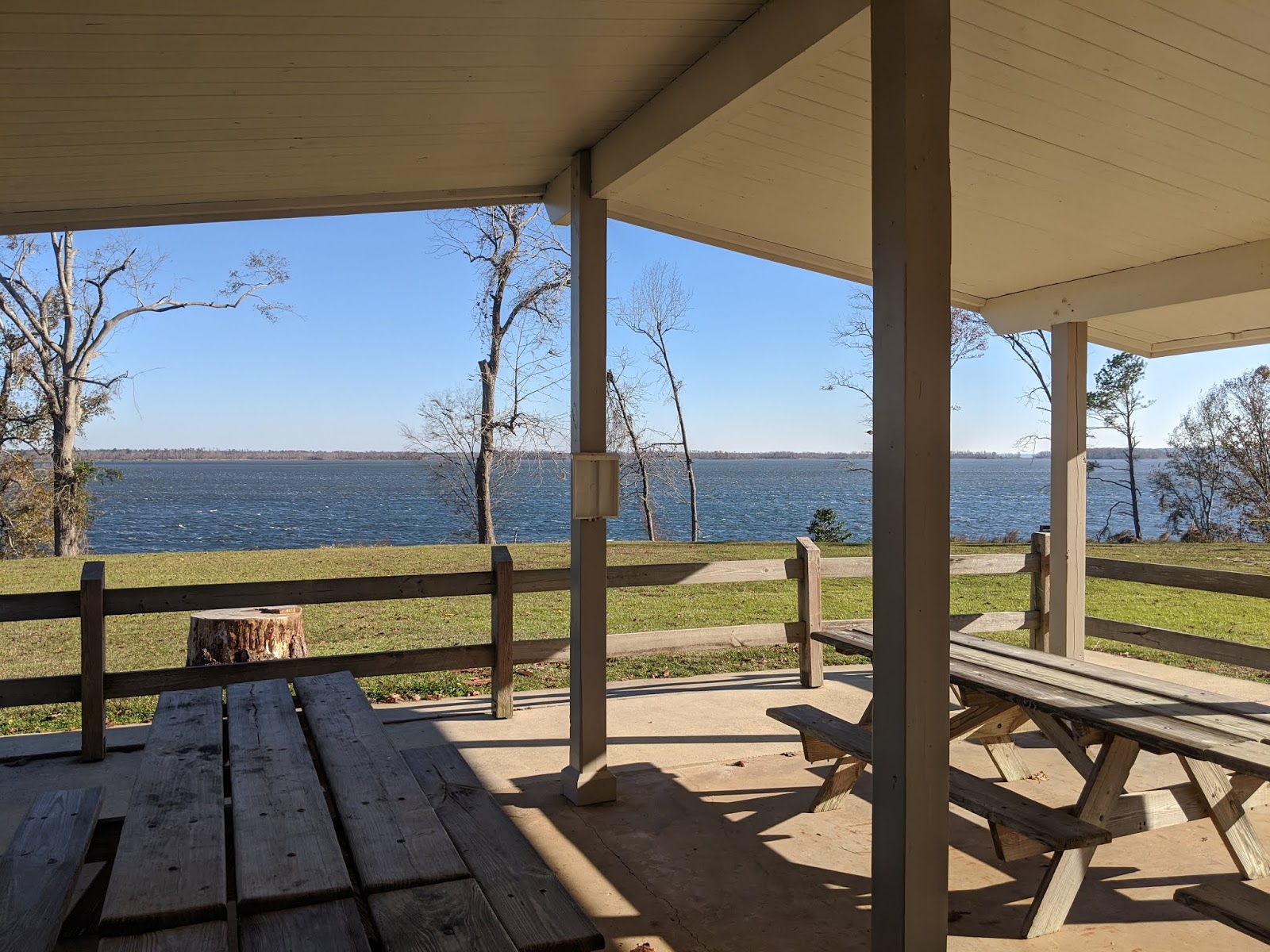
This beautiful view of Lake Seminole was taken from the picnic area at Three Rivers State Park just north of Sneads.
The now submerged lands visible from this vista are among some of the most historic in the South.
The lake now covers the significant Kemp Mound and Tan Vat Pond Archaeological sites. Located in the flood plain of the Chattahoochee River, the sites were flooded when the Jim Woodruff Dam was completed.
Research at these sites determined that they were occupied nearly 2,000 years ago by Native Americans who built villages and constructed an earthen burial mound in the rich floodplain lands.
In 1674, the Spanish mission of La Encarnacion a la Santa Cruz de Sabacola was established just across the Chattahoochee River in what is now Seminole County, Georgia. The Bishop of Cuba participated in the dedication of a church at Sabacola in 1675.
After the settlement of Jackson County, the lands now on the lake bottom were cleared for fields of cotton, corn and sugar cane. By the time of the Civil War, this was an area of large plantations.
To read more about the history of the Three Rivers State Park area, please visit www.exploresouthernhistory.com/threerivers.
Our series will continue.

Tuesday, May 20, 2008

Lake Seminole History, Part Five


One of my favorite historic sites around Lake Seminole is the old Sneads Town Pump.
Located on Old Spanish Trail in Sneads, the pump was installed in 1899-1900 and according to tradition was the second mechanical pump in the area. The land on which it stands was deeded to the Town of Sneads for $200.
Legend holds that "He who drinks from this pump will always return" and for generations, non-local grooms of local brides were brought here for a good "dunking" to make sure that they always brought local girls back home.
It is remarkable that the pump has survived through the years when so many similar landmarks around the area have disappeared.
The site is now maintained by the Town of Sneads and an adjacent historic marker tells the story of the town and the old pump.
Our series will continue.

Sunday, May 18, 2008

Lake Seminole History, Part Four


This view of Lake Seminole was taken from the Mission San Carlos site looking out at the "big water" of the lake just above the Jim Woodruff Dam.
Beneath the water near the shore is the site of Pope's Trading Post, an important early Jackson County settlement.
William S. Pope first arrived in Jackson County shortly after the transfer of Florida from Spain in 1821. He lived for a time at Mt. Vernon (Chattahoochee), then relocated west to the Chipola settlement in Jackson County. Early land records show that he acquired property around Webbville (a few miles northwest of Marianna).
He lived in this area and speculated on the success of the community until nearby Marianna was established and secured the Legislative Council's backing to become county seat. Pope then relocated to the high ground just west of the confluence of the Chattahoochee and Flint Rivers. Here he acquired land, established a trading post and began farming.
Pope's Store was listed as a Jackson County voting precinct during the 1830s and Pope was appointed to the role of U.S. Subagent to the Native Americans still living on reservations along the lower Chattahoochee and Apalachicola Rivers. In 1833 he negotiated the "Treaty of Pope's" with several of these groups, by which they agreed to relinquish much of their land. The treaty ultimately led to their removal west on the Trail of Tears.
The site of Pope's first settlement is now covered by the lake, but his legacy lives on in a pattern of continuous occupation in the area that continues today in the Town of Sneads.
Our series will continue.

Thursday, May 15, 2008

Lake Seminole History, Part Three


This aerial view shows the western end of the Jim Woodruff Dam at the point it intersects with the commanding bluff overlooking Lake Seminole in Jackson County, Florida.
The paved parking area visible in the left center of the photograph is the West Bank Overlook, a park area near Sneads that provides a beautiful view of the main lake.
The overlook and surrounding hilltop was the site of Senor San Carlos de Chacatos, a Spanish mission established here in around 1680 to serve a village of Christian Chacato Indians.
The Native Americans who inhabited the village on this site had originally lived west of the Chipola River, but relocated here between 1675 and 1680 after the two missions originally established to serve them had been abandoned following an uprising by part of the Chacato nation.
Spanish missionaries returned to this site and established a church that functioned for sixteen years as the most outlying European settlement in Florida. The presence of the mission establishment here was mentioned in the 1686 journal of Marcos Delgado and again in the documents relating to the 1693 expedition of Don Laureano de Torres y Ayala. The latter official led the first known overland crossing of Northwest Florida from the Apalachicola River to Pensacola Bay by European explorers.
The mission at this site was attacked and destroyed by Alibamo (Alabama) and Apalachicoli (Lower Creek) warriors in 1696. Many of the inhabitants were carried away as slaves and sold to the English in South Carolina. The church was destroyed and the implements used in the religious services there were looted. The survivors of the raid fled to a new site near present-day Tallahassee.
Florida Park Service archaeologist Ripley P. Bullen relocated the site of Mission San Carlos in 1948 while conducting studies in the area as the Jim Woodruff Dam was being built. No structural traces of the mission were found, but he did locate broken fragments of Spanish ceramics and other items consistent with the presence of a 17th century settlement at the site.
There are no markers at the site, but it is open to the public. Searching for artifacts is strictly prohibited on U.S. Government property.
Our series will continue.

Monday, May 12, 2008

Lake Seminole History, Part One


This is an aerial view of the Jim Woodruff Dam between Chattahoochee and Sneads. Dedicated in 1957, the dam itself is now a historic site having turned 50 years old last year.
Just beyond the dam can be seen the "big water" of Lake Seminole. This was the point, about 5,000 feet north of the dam, where the Flint and Chattahoochee Rivers originally flowed together to form Florida's noted Apalachicola River.
Within this photograph can be seen scores of historic sites that are of considerable significance. In the lower right hand corner of the photograph, just below the U.S. 90 bridge, can be seen Chattahoochee Landing, a major archaeological and historic site. Just below the modern U.S. 90 bridge can be seen a surviving part of the old "Victory Bridge," built during the 1920s and named in honor of the Allied victory in World War I.
Now submerged beneath the waters of the lake just above the dam are an array of archaeological sites, some dating back thousands of years. Also beneath the lake above the dam is the site of Nicoll's Outpost, a British fort constructed during the War of 1812 in anticipation of an invasion of Georgia. The war ended before the invasion could take place.
Our series on historic sites around Lake Seminole will continue tomorrow with a look at the Chattahoochee Landing archaeological site and Native American mound complex.

Sunday, May 11, 2008

Historic Sites around Lake Seminole


Forming much of the eastern border of Jackson County, Lake Seminole is a beautiful 37,500 acre reservoir located in the heart of one of the most historic settings in the United States.
The lake spreads across Jackson County, Florida and Seminole and Decatur Counties, Georgia. Formed by the Jim Woodruff Dam, built in the 1950s between Sneads and Chattahoochee, it covers the original confluence of the Chattahoochee and Flint Rivers.
This area was a major population center and strategic point for thousands of years. As a result, Lake Seminole covers and is bordered by literally hundreds of significant archaeological and historic sites. These include Native American mounds and villages, pioneer settlements, historic forts, Spanish mission sites, "ghost towns," plantations, riverboat landings, steamboat wrecks and more.
Beginning tomorrow, I will start a series on some of the most important historic and archaeological sites around Lake Seminole. I hope you will find this to be a good introduction to this fascinating area that is so vital to Jackson County.

Thursday, December 6, 2007

The Confluence of the Chattahoochee and Flint Rivers

This photograph was taken from the Jackson County shore of the Apalachicola River during the 1940s and provides a rare view of the original confluence of "forks" of the Chattahoochee and Flint Rivers. Construction was just beginning on the Jim Woodruff Dam at the time.

Today, the scenery shown here is completely submerged by Lake Seminole, the huge reservoir created by the completion of the dam.

For centuries, however, the "forks" was a major landmark for both Native Americans and early European explorers and settlers. Eventually the point where the Chattahoochee and Flint Rivers met came to be accepted as the official dividing line between Georgia and Florida. The Spanish maintained a mission, La Encarnacion a la Santa Cruz de Sabacola on the point of land visible near the center of the photograph between the two rivers during the late 1600s. Later this was the site of the large fort and town of the Native American leader Chislacasliche ("Cherokee Killer").

The right bank of the river, visible here, was the site of a fort constructed in 1814 by British troops during the closing months of the War of 1812. The fort was an outpost of the better known British fort at Prospect Bluff that later became known as the "Negro Fort" of the Apalachicola River.