A Two Egg TV Page. See more at https://twoeggtv.com.

Friday, April 18, 2014

#81 Legend of the Dogwood (100 Great Things about Jackson County, Florida)

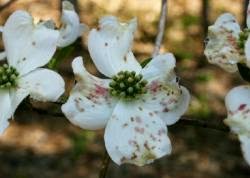
Dogwood blossoms on Good Friday
My favorite local Easter legend is #81 on the list of 100 Great Things about Jackson County, Florida.

Please click here to see the entire list as it is unveiled.

The beautiful dogwood tree is one of the best things about spring in the Deep South. The little trees shed their leaves in the winter after offering a beautiful burst of fall red color, but then in the spring they bloom with an incomparable glory of white blossoms.

Popular tradition in Jackson County associates them with the crucifixion and resurrection of Jesus Christ.

According to the story, the dogwood once grew much larger and served a terrible purpose. Its wood provided the cross on which Jesus was crucified.
A wild dogwood in bloom.

As Christians know, the story of the crucifixion is one of both great horror and great redemption. Good Friday, which is being observed across the world today, is remembered as the day on which Christ was nailed to a cross outside the walls of Jerusalem. It is remembered with horror because of the great suffering and cruelty he suffered. It is remembered as a day of great redemption, because it was the day on which he took the sins of the world upon his own shoulders and gave his life that we might live.

As Jesus said, "Greater love hath no man than this, that a man lay down his life for his friends." By laying down his life for us on Good Friday, he offered us all a better world and a brighter future.

The Legend of the Dogwood holds that because the tree served a terrible yet necessary purpose in providing the cross on which Jesus sacrificed his life for all people, it was altered and yet saved by God. Its size was reduced so that no dogwood would ever again grow large enough  to be used in a crucifixion. Then, to make up for its loss in stature, God blessed the tree with its beautiful blossoms.
Dogwood tree in bloom.

The blooms of the dogwood come to life each spring just before Easter to remind us of the resurrection of Jesus Christ. To help in this annual rite of remembrance, the blossoms were given special features. They are formed of four petals, with each blossom taking the shape of a cross.

The center of the flower symbolizes the crown of thorns that was placed on Jesus' head and the tip of each petal is indented with the prints of the nails that penetrated his hands and feet. And finally, by Good Friday of each year red spots appear on the beautiful white blossoms to symbolize the drops of blood that spilled from the body of the Savior.

The legend is an old and treasured part of Southern culture and history and is #81 on our list of 100 Great Things about Jackson County, Florida.

Happy Easter!


Thursday, April 10, 2014

#82 The Pensacola-St. Augustine Road (100 Great Things about Jackson County, Florida)

A surviving section of the Pensacola-St. Augustine Road
The historic Pensacola-St. Augustine Road is #82 on our list of 100 Great Things about Jackson County, Florida.

Please click here to see the complete list as it is unveiled.

In 1778 the American Revolution was underway and its outcome was far from certain. While most Americans of today have heard of the 13 Colonies and their fight for independence from Great Britain, few realize that there were other colonies in North America that did not join the war against King George III.

1776 map shows East and West Florida
East and West Florida were both British colonies when the Revolutionary War began and both remained loyal to King and Country throughout the conflict. Founded by the Spanish, the Florida colonies had passed to the control of Great Britain at the end of the French & Indian (or Seven Years) War in 1763.

The British administered Florida as two colonies. East Florida extended from the Atlantic Ocean to the Apalachicola and Chattahoochee Rivers, while West Florida extended from the Apalachicola and Chattahoochee all the way to the Mississippi. What is now Jackson County formed the northeastern corner of British West Florida.

Purcell-Stuart Map of 1778, showing the Pensacola-St. Augustine Road
The only two cities in all of present-day Florida were Pensacola and St. Augustine. To link them, the British connected a series of Indian trails and parts of the Old Spanish Trail to form a new road that they called the Pensacola-St. Augustine Road. This early "super highway" was the predecessor of today's U.S. 90 and I-10.

Heritage Village in Graceville
A stop on the Jackson County Spanish Heritage Trail
In Jackson County, the route of the Pensacola-St. Augustine road is roughly followed by today's State Highway 2. It crossed Holmes Creek into the county where Graceville stands today and crossed through the modern sites of Campbellton and Malone before reaching the Chattahoochee River at Neal's Landing, where the Creek Indian town of Ekanachatte ("Red Ground") stood at the time.

The road was mapped in 1778 when a British force marched across Florida from Pensacola to reinforce St. Augustine against an expected attack by American Patriots. Accompanying that expedition was cartographer Joseph Purcell and his map of the Pensacola-St. Augustine Road provides a fascinating look back through time.

In western Jackson County, using Purcell's map as a guide, it appears that the historic road generally followed modern State Highway 2 east from Graceville to Campbellton. What is now Holmes Creek was shown on the map as the "Weekaywee Hatchee." This Hitchiti Creek term means "Spring Creek" or "Spring River." If the name looks familiar, there is a reason. Today's term Weeki Wachi (as in Weeki Wachi Springs) is a corruption of the Creek term Weekaywee Hatchee.

Coosa Old Fields (today's Campbellton)
As shown on the Purcell-Stuart Map of 1778
The road between Holmes Creek and today's Campbellton was described by Purcell as "small and little trod." Where Campbellton stands today, the map shows that in 1778 was a place called the Coosa Old Fields.

These "old fields" had been the site of the Spanish conversion or part-time church of San Antonio. The Chacato inhabitants who lived there had fled the area in 1675 following a rebellion against the Spanish missionaries. Most of them wound up living on the Coosa River in Alabama. Living on the Coosa Old Fields when Purcell passed through was a small band of Creeks who had a village on the site of present-day Campbellton that they called Puckanawhitla ("Peach Tree").

Forks of the Creeks swamp
From Campbellton the road followed the approximate route of today's State Highway 2 east, but as it neared Marshal Creek it veered to the southeast. Today's St. Phillips Road is an actual part of the original Pensacola-St. Augustine Road.

The route by which the road crossed the Forks of the Creeks swamps is no longer in use today, but Purcell noted crossing what he called the "Chanpooly" (today's Chipola River). The creek that he called the "Chanpooly" was today's Cowarts Creek, a main tributary of the Chipola.

Trace of Pensacola-St. Augustine Road
Notice State Highway 2 through the trees at left.
From the Forks of the Creeks to the Chattahoochee River, the old road roughly followed the route of today's State Highway 2. A section of the original can be seen running along the north side of the modern highway in the vicinity of its intersection with Pleasant Ridge Road.

The road passed through the modern town of Malone and continued on to the Chattahoochee River. The section of Biscayne Road between Concord Road and the point where Biscayne intersects with State Highway 2 is a part of the original Pensacola-St. Augustine Road that is still in use today.

Chattahoochee River at Neal's Landing Park
The historic roadway reached the Chattahoochee River at today's Neal's Landing Park. There in 1778 stood the large Creek village of Ekanachatte and the trading post of its chief, an individual called "The Bully" for his prowess as a businessman. It is a little known fact that British troops camped at what is now Neal's Landing during the American Revolution.

The Pensacola-St. Augustine Road was replaced in the 1820s by the Old Federal Road and still later by U.S. Highway 90 and eventually Interstate 10, all of which followed more direct routes between Pensacola and St. Augustine. Its surviving portions, however, remain important historical landmarks in Jackson County that date from before the time of the American Revolution.

Jackson County Spanish Heritage Trail (in red)
Click to Enlarge
Today's Jackson County Spanish Heritage Trail commemorates in part the historic roadway. A 150-mile driving tour that connects eleven important historic sites from the Spanish era, part of its route follows State Highway 2 from Neal's Landing Park to Graceville.

An interpretive kiosk has been erected in Malone to tell the story of the Pensacola-St. Augustine Road. It stands in the city park facing Highway 71, one-half block south of Highway 2. Malone is a great place to stop for lunch while driving the Jackson County Spanish Heritage Trail.

If you are interested in learning more about the new Jackson County Spanish Heritage Trail, guide books are available for free at the historic Russ House and Visitor Center on West Lafayette Street in Marianna. You can also learn more by visiting the Spanish Heritage Trail section of the TDC website at:  http://visitjacksoncountyfla.com/heritage/spanish-heritage-trail.


Monday, April 7, 2014

#83 The Gopher Tortoise (100 Great Things about Jackson County, Florida)

Gopher Tortoise
The fascinating and stately gopher tortoise is #83 on our list of 100 Great Things about Jackson County, Florida.

Please click here to see the full list as it is unveiled.

Gopher tortoises (Gopherus polyphemus) - or "gophers" as they are called locally - favor dry sandy lands and the piney woods of Jackson County are among their favorite habitats. My dad always said you could tell a Yankee from a Native Floridian by their definition of the word "gopher." A Yankee, he noted, thought that gophers had fur and were mammals. Native Floridians knew, of course, that gophers were tortoises!

A gopher tortoise out for a stroll.
Gophers are tortoises, not turtles. Both are reptiles, but turtles live in the water and tortoises live on dry land.

They live in burrows in the ground, some of which can be impressive in size. I've never been to the bottom of a gopher tortoise burrow, but the Florida Fish and Wildlife Conservation Commission indicates they average around 7 feet deep and 15 feet long, although burrows as long as 40 feet have been found.

A gopher tortoise heads for its burrow.
You can tell if a gopher tortoise is living in a burrow by looking at the shape of the opening. If the burrow entrance is half-moon in shape, the odds are that a gopher tortoise still lives there. If the burrow entrance is round, that usually means that the tortoise has moved on and an armadillo has taken up residence.

Be aware that abandoned gopher tortoise burrows are favorite homes for rattlesnakes.

During the War Between the States (or Civil War), soldiers from the Florida Panhandle were called "Gophers" because they liked to eat gopher tortoises so much. Private Wade H. Richardson of the 1st Florida U.S. Cavalry noted that the term was "derisive."

In fact, gopher tortoises were hunted almost to extinction during the late 1800s and early 1900s. Once considered a delicacy, they were shipped out commercially to restaurants all over the country aboard steamboats from ports including Old Parramore in Jackson County and Vernon in Washington County. Vernon, in fact, was once believed to be the largest gopher shipping point in the world. They remained important commercially until the dwindling population forced restaurants to switch to sea turtles for their soups and stews.

Headed underground in a cloud of dust!
The tortoises were favorites of sailors and sea captains during the 1700s and 1800s because they could be kept alive in the holds of ships and pulled out whenever the cook needed fresh meat! They remained popular for this use until refrigeration became commonplace on ocean-going vessels.

When the Great Depression swept across Florida in 1929, gopher tortoises became to residents of rural Jackson County what possums were to the residents of Wausau in Washington County. Nicknamed "Hoover Chickens" after President Herbert Hoover, they provided meat for hungry families.

A threatened species today, gopher tortoises still live in all 67 of Florida's counties. They usually graze within 150 feet of their burrows, which are common in pastures and pine woods. Controlled burns are vital to their survival, because they help assure that tender grasses and plants are available for them to eat. It is illegal to kill them or disturb their burrows.

Good places to see them include Three Rivers State Park, Florida Caverns State Park, the Upper Chipola WMA north of Marianna and Apalachee WMA north of Sneads.

If you would like to learn more about gopher tortoises, FWC has an excellent brochure available for download:  A Guide to Living with Gopher Tortoises.


Saturday, April 5, 2014

#84 The Pirate Billy Bowlegs in Jackson County (100 Great Things about Jackson County, Florida)


William Augustus Bowles
The pirate Billy Bowlegs is #84 on my list of 100 Great Things about Jackson County, Florida.

Please click here to see the entire list as it is unveiled.

Jackson County, of course, is inland from the Gulf of Mexico, yet it has the strongest connection of any place in Florida to the infamous pirate and adventurer William Augustus Bowles. He is the man celebrated in Fort Walton Beach today as the pirate Billy Bowlegs and is often confused with the Seminole chiefs of the same name.

How Bowles came to be called "Billy Bowlegs" is a mystery to me as there is no evidence he ever used the name during his lifetime. That point aside, however, he most definitely was a pirate.

Born in Maryland, he first came to what is now Jackson County during the American Revolution after he was thrown out of the British military. East and West Florida, divided by the Apalachicola and Chattahoochee Rivers, were then colonies of Great Britain. Spain's more than 250 year rule had ended in 1763 when it lost control of Florida in the treaty that ended the Seven Years' War (known in America as the French & Indian War).

Parramore Landing Park
Making his way east from Pensacola, Bowles likely was trying to walk home to Maryland when he became hopelessly lost in the vast wilderness of the Florida Panhandle. Rescued by Creek Indian warriors from the Perryman towns, he was brought to the Chattahoochee River.

The Perryman towns stood on opposite sides of the river near present-day Parramore Landing Park. Thomas Perryman, the half-Creek son of trader Theophilus Perryman, lived on the Georgia side of the river at what later became Fairchild State Park. His son, William, lived in what later became Jackson County at Tellmochesses, a Creek Indian town that stood on high ground back from the river just north of Parramore Landing.

Creek Indian village in Jackson County, Florida
Bowles became closely associated with both Thomas and William Perryman, both of whom had taken up arms along with their people on the side of the British in the American Revolution. By the time the future pirate reached their villages, they had fought against American Patriots in Georgia.

Bowles married into the Perryman family, becoming a son-in-law of Thomas Perryman and brother-in-law of William Perryman. He frequented their towns and was a regular fixture in the Creek Indian villages along the Chattahoochee and Apalachicola Rivers.

Flag flown by Bowles' pirate ships
In the years that followed, Bowles declared himself the "Director General" of the "State of Muskogee." In this capacity, he declared war on Spain and commissioned the "Muskogee Navy," really a flotilla of well-armed pirate ships that attacked merchant shipping in the Gulf of Mexico.

The Spanish Coast Guard sent armed ships to destroy Bowles and his nest of pirates, but the "Muskogee Navy" was too strong for them and proved victorious in a pitched battle at Apalachicola Bay. The Spanish retreated and the pirates continued their depredations.

Uniquely, the crews of the pirate vessels commissioned by William Augustus Bowles included not only white and African American sailors, but Creek and Seminole Indian sailors as well. While his "State of Muskogee" existed only on paper and in his mind, his ships sailed with diverse crews.

Bowles eventually was taken prisoner and died at El Morro Castle in Cuba. What became of his ships - except for one seized by the English in the Bahamas - is not known. His legend lives on at the Billy Bowlegs Festival in Fort Walton Beach and may soon be celebrated in a Pirate Festival being considered for Parramore Landing Park!

The little known fact that the Pirate "Billy Bowlegs" once lived in Jackson County is #84 on our list of 100 Great Things about Jackson County, Florida.

If you missed the earlier post about Bowles' lost pirate treasure, please visit Lost Treasure of the Money Pond.


Tuesday, April 1, 2014

Ghost Town of Old Parramore in Jackson County, Florida

Crumbling tobacco barn in Old Parramore
Old Parramore is an almost forgotten ghost town in eastern Jackson County, Florida.

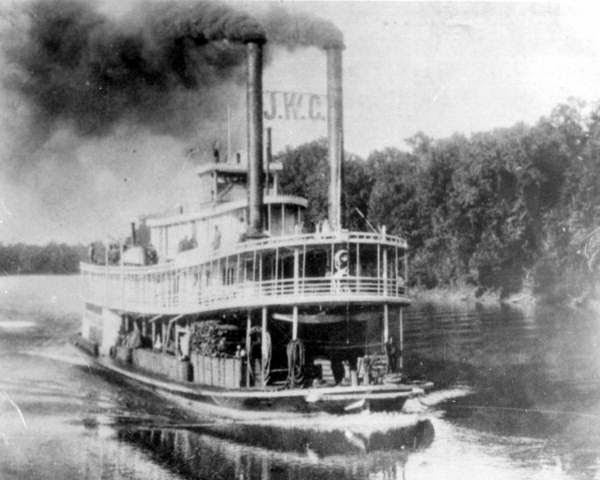
Established in the years after the War Between the States (or Civil War), it was a major riverboat port that came into existence as the local economy shifted from cotton production to naval stores and timber. Paddlewheel boats like the John W. Callahan and W.C. Bradley provided transport for these commodities.

https://twoegg.blogspot.com/2015/01/52-did-titanic-curse-sink-john-w.html
The John W. Callahan often stopped at Old Parramore
Five different riverboat landings served the growing community, providing places where paddlewheel steamboats could edge up to the bank of the Chattahoochee River to load or unload passengers and cargo. The most important of these was Peri Landing (pronounced "pea-rye"). It was located on a bend of the river just north of today's Parramore Landing Park.

A warehouse landing, Peri had storage facilities where farmers and businessmen could leave bales of cotton, timber and other cargo for the riverboats to transport either upriver to Columbus, Georgia, or downriver to Apalachicola, Florida. It holds a unique although forgotten place in local history as the eastern end of a major county road built in 1914 to connect western Jackson County with the Chattahoochee River. The steel Bellamy Bridge over the Chipola River that so many people love and remember was built as part of an upgrade associated with the building of the new road to Peri Landing.

Annual Oak Grove Homecoming at Old Parramore
Back on the high ground away from the river, the town of Parramore grew. It was centered around today's intersection of Oak Grove and Parramore Roads and at its height included at least five stores, blacksmith shop, cotton gin, sawmill, gristmill, post office and more. Large naval stores operations grew around the town, with turpentine stills operating in almost every direction. Local senior citizens recall how they could look to the horizons and see the stacks of the stills streaming black smoke into the air.

Site of Old Parramore business district today.
Railroads and modern highways eventually put the paddlewheel riverboats out of business and Old Parramore vanished with them. One by one the stores, turpentine stills and other businesses faded away. All that is left today are a couple of historic houses, a one-room school, cemeteries and the ruins of Central School.

Making hush puppies at the annual Central School Reunion
Two annual events bring the vanished town back to life each October. The annual Oak Grove Homecoming has been taking place for more than 50 years and features music, historical discussions, a brief sermon and dinner on the grounds. Each year, dozens of current and former Parramore residents and their families attend, along with those who come to learn more about the historic community.

The other event is the Central School Reunion. Former students and their families gather each year at the ruins of the historic school to remember the days of their youth.

If you would like to learn more about this significant Jackson County ghost town, please consider my book:

Old Parramore: The History of a Florida Ghost Town [Book]

Old Parramore: The History of a Florida Ghost Town [Kindle]


Monday, March 31, 2014

#86 The Graceville "Spook Lights" (100 Great Things about Jackson County, Florida)

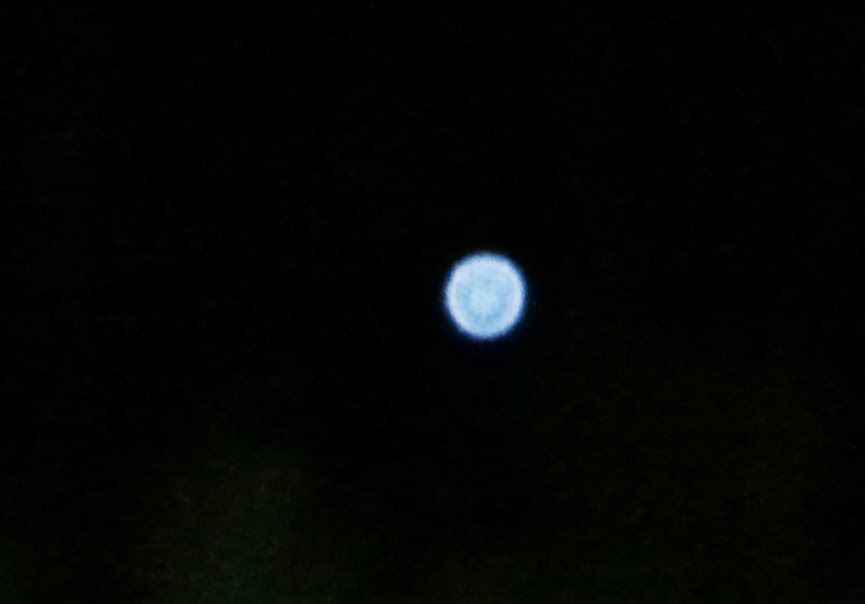
The Graceville Spook Lights
The mysterious Graceville Spook Lights are #86 on my list of 100 Great Things about Jackson County, Florida.

Please click here to see the entire list as it is unveiled.

On the west side of Graceville, there is a spot where you can look up the old railroad bed and see two strange lights that appear at unpredictable intervals almost every night. Legend says the lights are the unhappy ghosts of a man and woman who were hanged from the railroad trestle over 100 years ago.

Graceville Spook Lights
To see them, head west on State Highway 2 across Holmes Creek into Holmes County and turn left onto St. Johns Road. Pull off the side of the road and walk back east on Highway 2 a short distance to the old rail bed. From that point, if you look up the old railroad into Graceville and have a little luck, you will see the lights. You have to look for them from the Holmes County side of the line, but the lights themselves are in Jackson county.

(One note, please respect private property rights and don't walk up the old railroad bed to try to see them better. Not only is it disrespectful, illegal and dangerous, the lights will just vanish. They can only be seen from the spot by Highway 2. Also, please do not stand in the roadway!  You might become a ghost yourself.)

Now on with the story...

Spook lights or ghost lights are popular parts of Southern culture and folklore. North Carolina has its Maco Light. Georgia has the Surrency Spooklight. Arkansas is known for the Gurdon and Dover Lights and Missouri is famed for the Seneca Light. Like the Graceville Spook Lights, such phenomena appear almost nightly under the right conditions.

The ghost story behind the Graceville lights revolves around the all but forgotten 1910 hangings of Hattie Bowman and Edward Christian. The two had been arrested on charges related to the murder of Deputy Sheriff Allen Burns, who had gone to Bowman's home while investigating the theft of a gold watch from a Graceville merchant.

Residents of northwestern Jackson County were infuriated by the murder of Deputy Burns. A large group of people forced their way into the jail on the night of September 2, 1910, and dragged away the prisoners:

Graceville, Fla., Sept. 3 - Dangling from a trestle just outside the town, this morning, were found the bodies of Ed. Christian...charged with shooting Deputy Sheriff Allen Burns, and Hattie Bowman...who had been arrested on the charge of being implicated in the crime. (Toledo Blade, September 8, 1910)

The mob had taken Christian and Bowman to the trestle over Holmes Creek, tied nooses around their necks, tied the other ends of the ropes to the trestle ties, and kicked the two off the bridge. No one was ever arrested for their murders.

Graceville Spook Lights
Two strange flickering lights have been seen ever since from the point where the railroad crosses the road just west of Graceville. The lights are best seen in the winter, when the leaves have fallen from the trees, and first appear as a bare flicker, then grow in brightness briefly before fading away. Legend holds they are the ghosts of Hattie Bowman and Edward Christian, still seeking justice 104 years after they died.

While the story itself is tragic, the mysterious lights are on the list of 100 Great Things about Jackson County, Florida.

The story is included in my book, The Ghost of Bellamy Bridge: Ten Stories of Ghosts & Monsters from Jackson County, Florida. It is available at Chipola River Book & Tea in downtown Marianna or online from Amazon.com in both print and Kindle editions:

The Ghost of Bellamy Bridge [Paperback]

The Ghost of Bellamy Bridge [Kindle]


Thursday, March 27, 2014

#88 The Willis House (100 Great Things about Jackson County, Florida)

Willis House in Greenwood, Florida
The 9-bedroom Willis House in Greenwood is #88 on my list of "100 Great Things about Jackson County, Florida."

Please click here to see the full list as it is unveiled.

Surrounded by beautiful live oaks, this much beloved home faces Fort Road in Greenwood. While many mistake it for an antebellum home, the house was completed by Dr. and Mrs. R.A. Willis in 1917 and will be 100 years old in three years.

Mrs. R.A. "Ma Lizzy Willis and her home
State Archives of Florida/Memory Collection
One of the largest homes built in Jackson County during the early 20th century, the Willis House has nine bedrooms. Each has its own lavatory and fireplace. Tradition holds that Mrs. Willis insisted that the house be so large because she wanted her children and grandchildren to always live under her roof.

The house was surrounded by numerous other structures, including a smokehouse, chicken coop, barns, servants' quarters and more. One unique feature was its ice house, where blocks of ice were stored. Although Dr. John Gorrie had invented artificial refrigeration more than 70 years before the Willis House was built, it took time for it to become commonplace in Florida. The earliest "refrigerators" were iceboxes in which perishables were preserved using cool air from actual blocks of ice. The ice house provided a cool place where the blocks could be stored to provide a steady source of ice for the house's icebox.

The Willis House in Greenwood
A prominent physician, businessman and politician, Dr. Willis was serving in the state senate when the house was completed. The following year, like other doctors in the area, he did his best to save patients during the terrible Spanish influenza pandemic of 1918. The outbreak claimed more than 400,000 lives in the United States and millions worldwide. It is said that the house often doubled as a hospital for seriously ill patients.

In 1923, while serving as health inspector for Florida's prisons, he spoke up about the treatment of sick and injured inmates:

Dr. R.A. Willis of Greenwood, Fla., who is elected by the board of commissioners of state institutions to visit convict camps and inspect them as to sanitary arrangement and the physical condition of the men has told me repeatedly that he had visited camps and ordered men to be sent here [i.e. Raiford] for hospital treatment and on his next visit, about thirty days later, would find these same men still at the road camp. - J.S. Blitch, Superintendent of State Prison Farm at Raiford, May 3, 1923.

The willingness of men like Dr. Willis to speak up gradually led to improvement in conditions for those held in state institutions across Florida.

The Willis House today is framed by majestic oaks and giant azaleas. As of this writing, it is for sale.

Sunday, March 23, 2014

#90 Shangri-La Spring (100 Great Things about Jackson County, Florida)

Shangri-La Spring
On the north shore of Merritt's Mill Pond just downstream from Blue Springs is one of the most beautiful places in all of Florida. Shangri-La Spring is #90 on our list of 100 Great Things about Jackson County, Florida. Please click here to see other listings as they appear online.

Currently accessible only by boat, Shangri-La Spring flows from a vent or crack in the limestone about 800 feet down the mill pond from Blue Springs. The maximum depth is 10.5 feet and the water flows up from the ground at a year-round temperature of 68.97 degrees.

The spring is much smaller than its upstream neighbor (Jackson Blue Springs is the only First Magnitude Spring in the Chipola River basin), but it makes up for its size with spectacular natural beauty.

A scout enjoys the view of Shangri-La during a guided tour.
A 20-foot bluff rises above the Mill Pond at Shangri-La, once used by Graham Air Base as a picnic area and recreational complex, and the huge boulders and natural plants that surround the spring are stunning. The water is crystal clear.

Shangri-La is embedded in the history of Jackson County. The first Spanish explorers to enter the area passed by in 1674 while following the real Old Spanish Trail. Often confused with U.S. 90 or the current county road of that name, the original Old Spanish Trail angled northwest from present-day Sneads to Blue Springs via what is now Providence Church and Reddoch Roads.

Shangri-La in Jackson County, Florida
Fray Rodrigo de la Barreda, a Catholic priest who accompanied that expedition, later described the area around Blue Springs and Shangri-La in glowing terms:

...[A]round it are numerous huge rocks and habitable caves frequented by the Indians on their hunting trips for bear, deer and buffalo, of which there is an abundance. The soil for three or four leagues round is rich and suitable for all kinds of cultivation. There are very excellent wild grapes on the many vines, and many luscious chestnuts. Here we spent the night, thanking God for such a pleasant and delightful spot uninhabited save for the wild animals who enjoy it. - Fray Rodrigo de la Barreda, 1693.


Spectacular view of Shangri-La and Merritt's Mill Pond
The Old Spanish Trail led west to the Natural Bridge of the Chipola River at today's Florida Caverns State Park after passing Shangri-La.

Soldiers under Major General Andrew Jackson explored the caves and rocks around Shangri-La when the U.S. Army camped at Blue Springs on the night of March 10, 1818. The First Seminole War was then underway and Jackson had invaded Spanish Florida on the orders of President James Monroe. He was on his way to attack Pensacola.

Crystal clear water of Shangri-La Spring
Less than one year after Jackson and his men passed through, the first American settler laid claim to the rich lands surrounding Blue Springs and Shangri-La. The adventurous frontiersman William Pyles settled on the site of what is now Blue Springs Recreational Area, which encompasses both Blue Springs and Shangri-La. Florida was still part of Spain when he arrived, but he spent at least one year there clearing fields, building a cabin and raising a crop.

Pyles' claim soon passed to Major William Robinson, who built a comfortable home on the hill overlooking Blue Springs. Robinson's plantation covered 3,100 acres encompassing both Blue and Shangri-La Springs. Some idea of the appearance of the area at the time was left by Rt. Rev. Michael Portier, the Catholic Bishop of Florida, who visited the major at his home in 1827:

"Rocks...as high as the trees themselves"
...Rocks were to be met as high as the trees themselves, and bordered around with wild flowers, while sweet-scented shrubbery decked the sides and summits of these pygmy mountains. Natural wells, underground caves, oak trees blasted by lightning or cast by the tempest across our narrow pathway like an artificial bridge - everything was present to enhance the spectacle. - Rt. Rev. Michael Portier, 1827.

Robinson lived at Blue Springs (then called Robinson's Big Spring) and Shangri-La until his death. His lands eventually passed to his relative, Governor John Milton.

View down into the cave at Shangri-La Spring
Arriving in Jackson County during the late 1840s, Milton folded Major Robinson's former lands - including Shangri-La - into his Sylvania Plantation. Accounts from the time note that Milton often enjoyed fishing and walking along the banks of the springs and stream to escape the pressures of Tallahassee during his tenure as Florida's Confederate governor.

Confederate soldiers also enjoyed the crystal clear water and scenery while stationed at Camp Governor Milton, which incorporated Major Robinson's old home at Blue Springs. Some of these men carved their names into the rocks of Shangri-La Bluff and they rode past the spring on their way to the Battle of Marianna in 1864.

Shangri-La Spring today is owned by the state and protected by Jackson County Parks & Recycling. Future work will open the grounds to the public, but for now the scenic spot can be accessed by boat via the mill pond or by canoe or kayak when Blue Springs is open to the public during the summer season.

Tuesday, March 18, 2014

#91 Governor John Milton (100 Great Things about Jackson County, Florida)

Gov. John Milton
(D) Florida
Governor John Milton is #91 on my list of 100 Great Things about Jackson County, Florida. Please click here to see the full list as it is posted.

Born in Louisville, Georgia, on April 20, 1807, Governor Milton was a descendant and namesake of the famed English poet John Milton, who wrote Paradise Lost. The governor's grandfather was a soldier of the American Revolution and his father, General Homer V. Milton, served with distinction during the War of 1812 and Creek War of 1813-1814.

As a boy, the "Governor" - as he is generally known around Jackson County - studied at an academy in his hometown of Louisville and excelled in subjects that included Greek, Latin, English and mathematics. He was undoubtedly a bright and talented individual who was admitted to the bar in Georgia before he was 20 years old.

Leaving his hometown, Milton went on to practice law in Columbus, Georgia, where he was also elected to the rank of colonel in the Georgia militia (forerunner of today's Georgia National Guard). He ran for U.S. Congress in 1832 as a supporter of John C. Calhoun's theory of nullification.

Columbus, Georgia
The Nullifcation theory held that a state, by virtue of its sovereign status, could overrule or nullify actions of the Federal government that were not beneficial to the state. Milton lost that race, but remained an adamant supporter of states' rights and opponent of the growing power of the Federal government.

On August 11, 1834, Milton was arrested and charged with murder after he shot a man with whom he had been engaged in a personal and political dispute:

This day has terminated the controversy between Col. John Milton and Maj. J.T. Camp, by the death of the later. Col. Milton understanding that his life had been threatened by Maj. Camp, procured a double barreled Gun, and walked over to Nicholas Howards Store, and discharged the contents of one of his barrels into his back, and while falling discharged the other into his left breast. -

New Orleans, Milton's one-time home.
Photo courtesy of Brian Mabelitini
Milton turned himself in to local authorities, but was acquitted in a trial that began less than two weeks later. The jury determined that he had acted in self defense as Camp had threatened to kill him.

By 1835, Milton had relocated to Mobile, Alabama, where he continued his practice of law. He raised a company of cavalry during the Creek War of 1836 and took part in the movements that sent many of the Creek Indians west on the Trail of Tears.

Following the death of his first wife, Susan Amanda Milton, the future governor remarried Caroline Howze with whom he eventually had ten additional children. He and Susan had parented five children, but only one - William Henry Milton - survived the diseases of that day to become an adult.

Seeking more fertile ground for his law practice, the future governor moved to New Orleans and lived in Louisiana until 1845. It is believed that he was the same John Milton who was listed as having been badly injured during a steamboat explosion that took place on the Mississippi River at New Orleans on July 1, 1845. Among the "gentleman" passengers on the boat was a "John Milton" who was reported to have been badly scalded by steam.

Sylvania Plantation Marker at Blue Springs
Not long after this accident, Milton began his move from Louisiana to Jackson County. Through family connections he acquired the plantation of the late William Robinson at Blue Springs, which he expanded tremendously during the late 1840s and 1850s. Eventually his "Sylvania" plantation grew to include more than 6,000 acres of prime Jackson County land.

Always active in military and political affairs, John Milton was elected Major General of the 1st Division of the Florida Militia in 1849 and to a seat in the Florida Legislature one year later. Even though Jackson County was then a "Gibraltar" of the now-defunct Whig Party, Milton was a dedicated Democrat. His popularity is evidenced by the fact that he was elected to the legislature from a county controlled by party other than his own.

Old State Capitol in Tallahassee, Florida
In 1860, Milton was elected Governor of Florida by a commanding margin in the same November election that saw Abraham Lincoln elected President of the United States. In Florida, Milton received 6,994 votes in that election, compared to 5,248 for his opponent. Abraham Lincoln did not receive a single vote in Florida.

Although in those days the Governor-elect did not take office for nearly one year after being elected, Governor Madison S.Perry worked closely with his successor. It was Governor-elect Milton who announced Florida's secession from the portico of the Old Capitol on January 10, 1861.

Old Capitol as it appeared when Milton was Governor
State Archives of Florida/Memory Collection
Governor Milton assumed his office in October 1861. By that time Florida was part of the Confederate States of America. The governor would lead his state through nearly four years of war against the United States, even though he had been elected to his post while Florida was still part of the U.S.

His tenure as governor was remarkable as he was tasked with protecting the citizens of a state all but abandoned by the Confederate military. On their own and with little help from the Confederate capital in Richmond, Governor Milton and the Florida Legislature raised and equipped troops both for the Confederate armies and the defense of Florida.

Old Capitol Building in Tallahassee
The governor also stood up for the poor people of his state in the face of acts that reflected the growing desperation of the Confederate government. When Confederate commissary officers began seizing the last cows from the widows and children of Southern soldiers, Milton pleaded their case to Richmond. When the wives and children of a group of Unionists from Taylor County were seized by the Confederate army and placed in a concentration camp near Tallahassee, Milton secured their freedom and had them passed through the lines to their husbands and fathers.

Battle of Marianna Monument
Milton played a critical role in maintaining Florida's transportation systems during the war and in providing for the families of soldiers. His efforts helped secure the Confederate victory at Olustee on February 20, 1864, and when Marianna was attacked on September 27 of that year, he rushed forward to Chattahoochee determined to oppose the Federal advance in person if the enemy continued to advance.

On March 6, 1865, Confederate troops that included the Governor's sons - Major William H. Milton of the 5th Florida Cavalry and Cadet John Milton of the West Florida Seminary (today's Florida State University) - defeated a Union attempt to take Tallahassee and nearby Thomasville, Georgia. Dr. Charles Hentz, a Confederate surgeon who knew the governor well, remembered that things did not seem right with him in the wake of the dramatic victory:

Gov. Milton's grave at St. Luke's Episcopal Church
Governor Milton made an address to the soldiers in the Capitol. I had observed him when we were going down, walking up & down the Depot platform with an air of the most profound abstraction and dejection. I think he must have been suffering from some disease of the brain.

Less than one month later, Governor John Milton was dead. His life came to an end from a self-inflicted gunshot wound at his Sylvania plantation on April 1, 1865. While many of blamed Milton's death on suicide, recent research has produced a copy of a special Extra issue of the West Florida News from the week of his death that indicates the fatal gunshot wound was fired by accident. Milton was preparing for a bird-hunting expedition with his son when his shotgun accidentally discharged.

The Governor is buried at St. Luke's Episcopal Church in Marianna, alongside his father and many other members of his family. The Milton family remains heavily involved in business, legal and community improvement efforts in Jackson County to this day.

To learn more about Governor Milton's life and administration, please consider my book: The History of Jackson County, Florida: The War Between the States. It is also available at a discounted price for Kindle readers.